
Facts & Figures
Interpreting acceptance data is tricky because so many factors go into an application. While applicants to professional schools have a broad range of experiences and backgrounds, successful applicants will have strong performance in science courses, a competitive standardized test score (varies by school), clinical experience, public speaking ability, active involvement in leadership and community service, and participation in things that set them apart, such as study abroad, research, and other forms of contributing to campus and the community.
From 2023-2025, the national average of accepted students was 48% for Allopathic (MD) programs and 41% for Physician Assistant (PA) programs. Osteopathic and Dental programs provide matriculant, not acceptance, data. The three-year matriculant average for Osteopathic (DO) programs is 43%; Dental programs have a three-year matriculant average of 55%. It is a highly competitive process and one that is as much about timing, understanding what schools seek in their candidates and prospective students, and persistence, as it is about academic credentials. University of Maryland students are consistently accepted and matriculate into these programs at rates significantly higher than the national averages (see graph below).
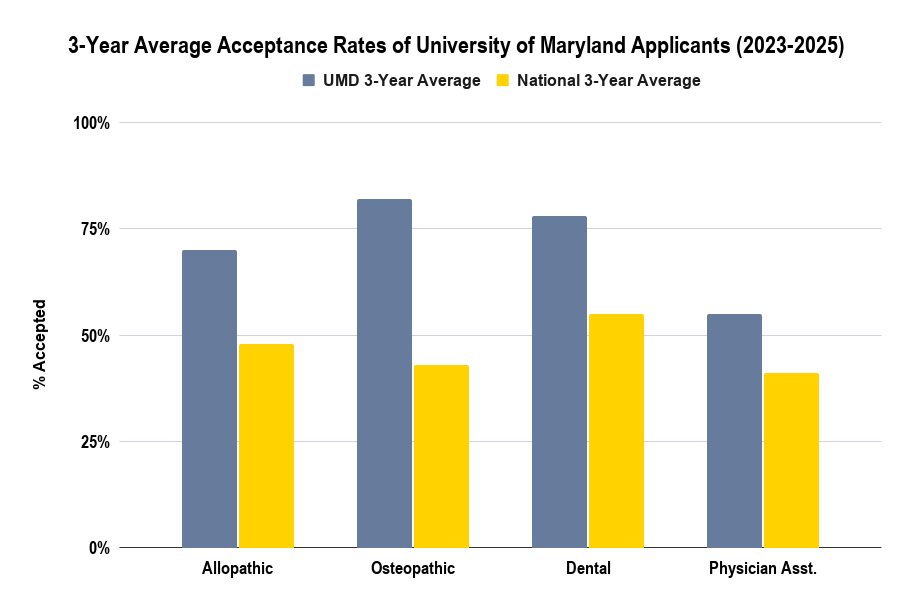
*National Data for MD and PA programs are reported based on accepted applicants. National DO and Dental data are reported for matriculants.